
Let’s Talk Liverpool: A city region ready to deliver
 14 October 2025
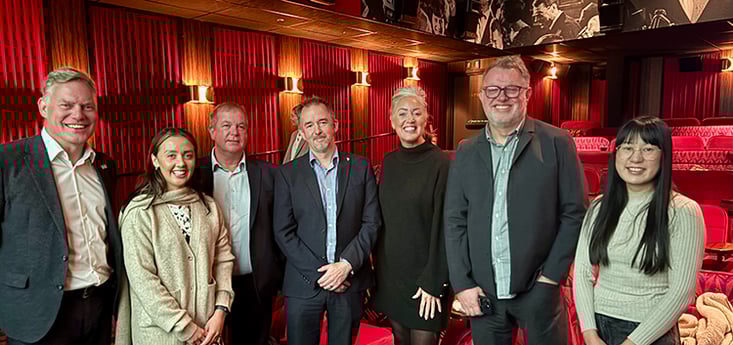
As part of our series of Let’s Talk events, delivered in partnership with the British Property Federation, we were delighted to bring together leaders from across the public and private sectors to explore the forces shaping the Liverpool City Region.
Kicking off with an insightful, wide-ranging conversation between Steve Rotheram, Mayor of the Liverpool City Region, and Stephen Cowperthwaite, Managing Director for Liverpool and UK Regions at Avison Young, their discussion set the tone for the morning, with a considered exploration of how Liverpool can build on its strengths in innovation to stimulate economic growth and prosperity.
A panel discussion followed, chaired by Remi Smith, Associate Director at Avison Young, with contributions from Jonathan Falkingham MBE of Urban Splash, Colin Chong of Everton Football Club, Katie Dean of Keepmoat Homes, and Chris French of the University of Liverpool – all sharing their own perspectives on the city’s future potential and the ingredients for success.
Growth, innovation and connectivity
With the Labour Party conference about to take place in the city, and with the government setting out its stall on infrastructure and housing delivery, Mayor Rotheram stressed how Liverpool’s Local Growth Plan is one built on the principles of innovation and collaboration. And while this might not be something that’s going to win votes on doorsteps, it is the right strategy to stimulate growth, deliver for communities, and strengthen the city region’s national profile.
In the years since Liverpool’s devolution deal, every major economic indicator has improved, with its key sectors growing by 17%, compared with just 5% nationally. Building on this success story with urgency is now a critical task, with innovation repeatedly cited as a key driver of this kind of progress.
The discussion highlighted Liverpool’s unique combination of strengths in life sciences, advanced computing and AI. The Liverpool School of Tropical Medicine and the National Pandemic Institute showcase world-class expertise in research, while the £30m supercomputing centre at Sci-Tech Daresbury puts the city region firmly at the forefront of AI and quantum technologies.
These assets are attracting responsible AI firms, while graduate retention has been transformed. Once ranked among the lowest in the UK for students, Liverpool is now in the top three nationally, a shift attributed to the growth of high-value jobs and the wider appeal of the city.
Connectivity was also recognised as a critical piece of the puzzle. The creation of the Liverpool–Manchester Railway Board reflects a shared ambition to boost capacity and freight links rather than simply targeting speed. Rotheram argued that better rail infrastructure could unlock the port’s freight potential, reduce congestion, cut emissions and generate £90 billion in GVA, a sum greater than the Oxford–Cambridge Arc.
Regeneration that puts communities at the core
The conversation also brought into focus that Liverpool’s housing ambitions are about more than just delivering units but about creating real value for communities. It was also made clear that partnerships between the public and private sectors are critical to moving at pace, while tying housing development to apprenticeships and skills programmes ensures new schemes feed into the wider economic fabric of the city and region.
The panel brought this people-centred view to life. Everton Football Club’s new stadium was discussed as a flagship regeneration project, built on the back of one of the UK’s largest public consultations with 60,000 responses from the community. This extensive engagement not only helped secure legitimacy for the project but also ensured the final design preserved the spirit of Goodison Park while meeting modern requirements.
Festival Gardens was described as another key regional scheme, with Urban Splash’s plans to create a multi-generational neighbourhood spanning elderly care, co-living, affordable homes and social rent. The innovative ‘master-developer plus sub-developer’ model was highlighted as a way to combine speed with variety and inclusivity.
Katie Dean reinforced this point by explaining Keepmoat’s philosophy of measuring success in terms of ‘happy people’ rather than housing numbers. Across the panel, there was wide agreement that housing must be people first, not numbers first.
Skills, ambition and the path ahead
The role of education and skills in sustaining growth was also front of mind. Chris French of the University of Liverpool highlighted a record undergraduate intake of 7,400 UK students, despite challenges in overseas recruitment, reflecting the city’s appeal as a place to study and remain.
Its focus on the Knowledge Quarter and Health Innovation Campus, in partnership with the NHS, is training hundreds of new doctors every year, while consolidating Liverpool’s global reputation in life sciences, health tech and med tech. Investment Zones are only expected to strengthen this further. The discussion also emphasised that building a skills pipeline spanning apprenticeships through to advanced scientific research will be absolutely vital to maintaining this level of momentum.
Looking ahead, the panel set out an ambitious vision for Liverpool’s future. Jonathan Falkingham argued for the city to become the UK’s most attractive relocation destination, blending lifestyle, space and wellbeing. Chris French emphasised the globally unique mix of NHS, universities and industry clustered in the Knowledge Quarter and Innovation Zone. Katie Dean called for more large-scale regeneration in the city region, particularly the north of the city, to transform lives and communities, while Colin Chong stressed the need for urgency, warning that red tape and delay risk slowing progress.
The shared consensus was that Liverpool already undoubtedly has the ingredients it needs for success: strong communities, skilled people, bold leadership, available land, innovation assets and a keen investor appetite. The real challenge now is delivery, and the event closed on a call for confidence, collaboration and pace to ensure this transformation happens at scale.
